
 |
| Catullus' Roman Villa |
 |
| Sirmione Castle |
 |
| The Sirmione Penninsula |
 |
| The best way to finish the day |
|
| Catullus' Roman Villa |
|
| Sirmione Castle |
|
| The Sirmione Penninsula |
|
| The best way to finish the day |
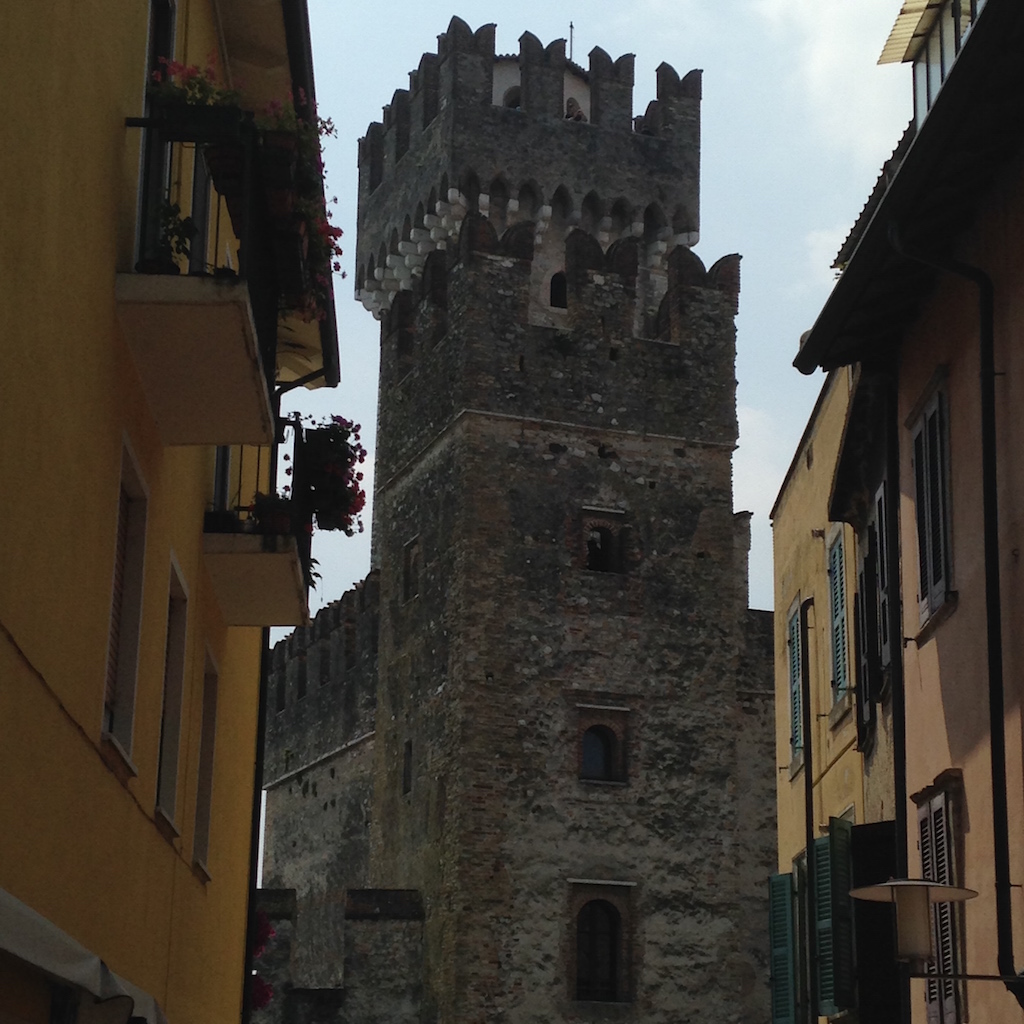
The Sirmione castle is the most significant example of the defensive structures on Lake Garda. Between the 13th and 14th centuries, the village of Sirmione was a border town situated between the land owned by the Della Scala dynasty of Verona and the property of the lords of Milan. The original nucleus was delineated by a tall square wall with three towers, and was probably built on top of the remains of a Roman fortress.
In the mid 14th century, the fortified dock was completed and a wall was built around the nearby village. A special construction technique was employed in cui bricks baked in the vicinity were used with stone that came from the nearby hill of Cortine. The golden era of the castle arrived at the end of the 14th century. However, even though it was an extremely important fort, it never became the residence of the court. As wars raged on, the reigning Della Scala family abandoned the castle, and the Venetian Republic took over its administration in 1405. In the centuries that ensued, the development of heavy artillery marked the end of medieval castles, and pentagonal-shaped fortresses with relatively low, thick walls that resisted heavy cannon attacks were built in Peschiera and Sabbioneta.
The fortress was used as a barracks for over three hundred years, and no radical changes were made from 1797 with the advent of Napoleon to the beginning of the 20th century. The castle was renovated several times during World War I.




 |
| The Lion of Saint Mark, representing the evangelist St Mark, pictured in the form of a winged lion, is the symbol of the city of Venice and formerly of the Republic of Venice. It appears also in both merchant and military naval flags of the Italian Republic. |


The Church of San Pietro in Mavino: It was founded, according to tradition, by local fishermen in Lombard times. A part of the old building is still standing, although with additions and changes that have occurred in various periods, including Romanesque (XI-XII century).
The building stands on the highest point of the peninsula of Sirmione, outside the town, not far from the ruins of the so-called "Grotte di Catullo" (famous archaeological site with the remains of a large residential building from the Roman period, and become reactivated Lombard period in fortified site).
The first documents mentioning the church of San Pietro in Mavino date from the eighth century (in a manuscript of the year 756), while much more important is the document of the year 774 that records the donation of all the possessions of the Lombards to Sirmione Carolingian monastery of St. Martin of Tours, among them precisely the church of San Pietro in Mavino).
The church of San Pietro in Mavino is today a rectangular nave with three semicircular apses to the east, and draws buildings of Carolingian derivation of the VIII-IX centuries.A bit off the beaten path from the usual tourist trade, a small sign will take you to a small, but stunning church.


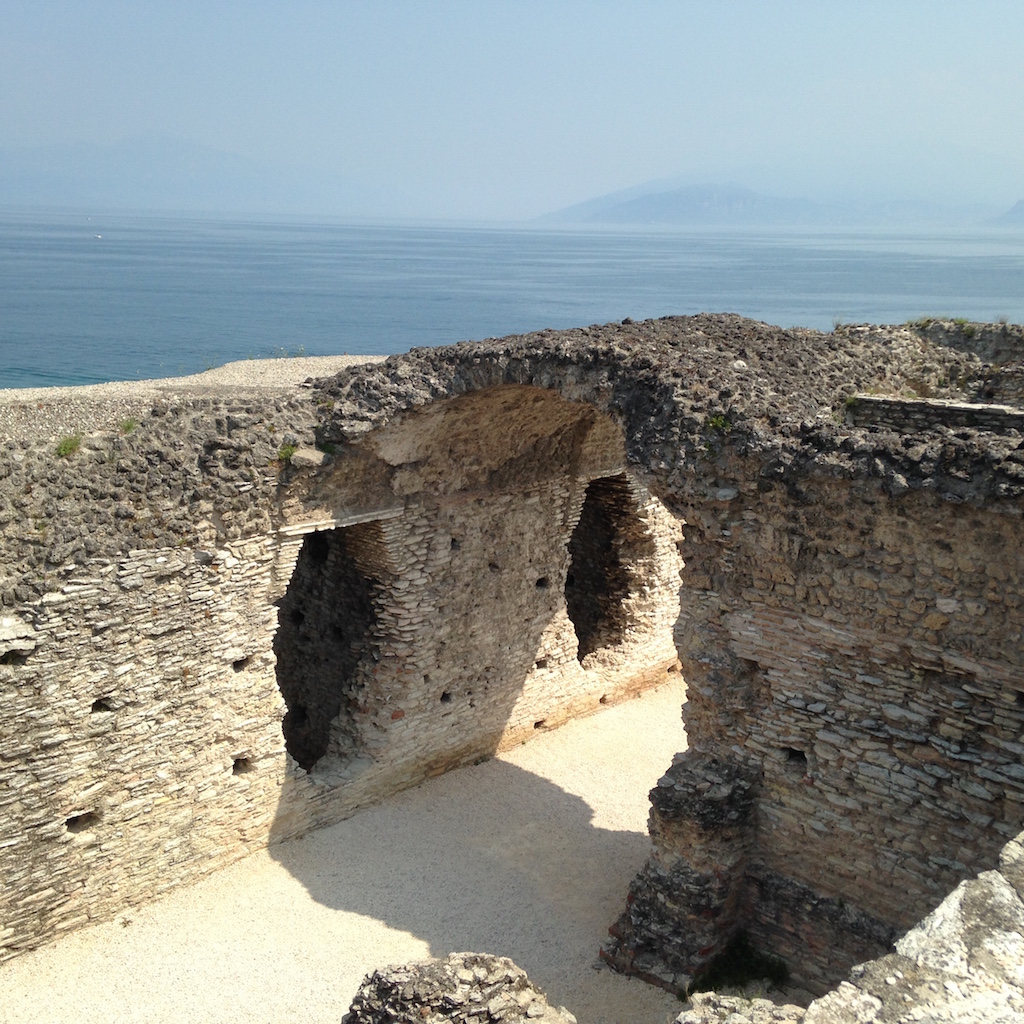
Catullus Grotto, not a real cave, but the remains of the biggest Roman villa in northern Italy. The archaeological area is on the tip of Sirmione Peninsula on lake Garda.
It was a huge building with sophisticated engineering solutions to get through the gaps and drops of the rocks and create a wide terrace almost suspended above the lake. According to the archaeological findings it was a luxurious building decorated with columns, mosaics, frescoed walls and a private spa.
Even today is a quite fascinating place, a maze where, between half collapsed arches and cyclopian walls, grow centuries old olive trees with the blue lake as back drop.
According to the legend, the villa was the house of the famous Latin poet Catullus that mentions Sirmione in some of his most beautiful poems.A short drive from where I am in Northern Italy, Sirmione is full of history, and a great place to spend a day. Part I is the ruins of the Roman villa, thought to have been owned by the Roman poet Catullus.


 |
| Remains of tile flooring |




 |
| Remains of original plastered and painted walls |


 |
| A house on the outside, taken from the wall. Just thought it looked pretty cool. |
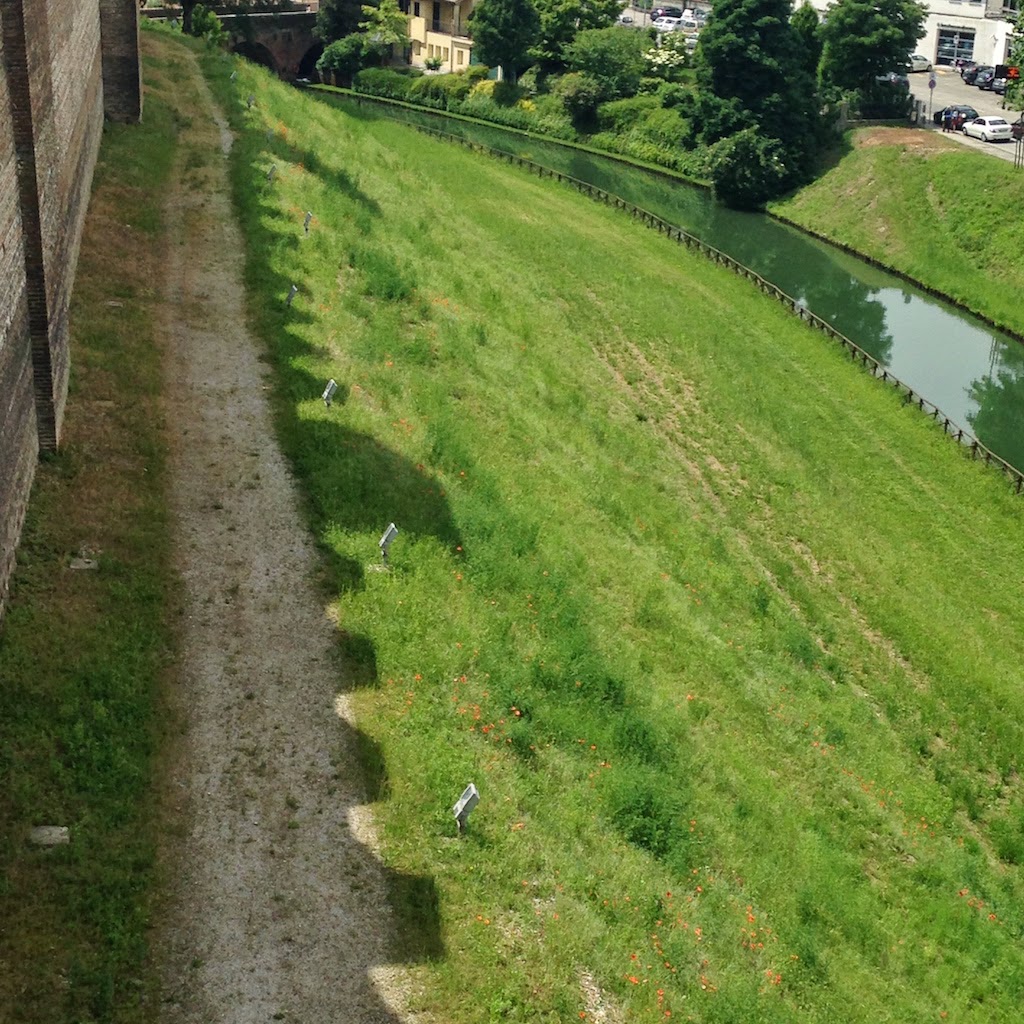 |
| Hard to see, but poppies growing along the outer embankment. On Memorial Day. |
 |
| Just who do you have to be to on and mansion inside of the walled town of Cittadella? Yes, that's a car elevator on the right side. |
